
Written by Greg Ellifritz
While I don’t necessarily foresee the “post-apocalyptic-man-on-the-run” scenario that many think is in our future, having some supplies ready at hand for quick movement seems like a good idea to me. Smart folks looking at the recent events following the earthquake in Japan, as well as other worldwide natural disasters may want to pack some basic survival gear in a handy location ready for quick retrieval should their homes or neighborhoods become uninhabitable. In preparedness circles, this stash of survival supplies is often called a “Bug-Out Bag” or “B.O.B”.
To be honest, I really don’t know what to prepare for. It could be a natural disaster. It could be a total societal collapse. It could be anything in between. I want to have enough supplies to last as long as possible under any scenario. I want to be able to thrive in an outdoor environment in the middle of winter or a government shelter in case of a natural disaster.
The supplies that I have may be useful for you or they may not be what you personally need, I just want to give you an idea of the kind of things I have packed up so you might use my list as an inspiration to create your own Bug-Out Bag. So here we go, my list of supplies along with brief explanations as to my logic for choosing them….
Shelter:
This is important. While I can make a shelter in North American woodlands out of natural materials, who says I’ll be stuck out in the woods? Again, I like to be prepared for anything.
- Cotton flannel travel sheet- for “shelters” or hostels
- MSR Tarp Tent– much easier to use than rain tarps and much lighter than real tents
- Adventure Medical “Heatsheets” bivy shelter– small light and warm protection from the elements
- 2 space blankets
- multiple trash bags
- 2 rain ponchos to serve as ground cloths or additional shelter
- a (in winter) Snugpack Jungle sleeping bag (rolls up smaller than a football and is good to around 30 degrees)
- paracord (for tying up the shelter)
- duct tape (bring LOTS of this…many uses. I use the “flat packs”. Otherwise wrap it around your water bottles to save space)
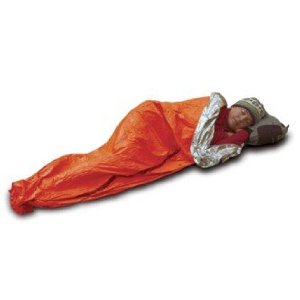
Heatsheets bivvy…way warmer than a space blanket
Food and Cooking and Water Purification:
Most people spend way too much time on this. Food really isn’t all that important. Most of us have plenty of extra “fuel” built up around our waistlines and can live for a long while without food. The stuff I have here is primarily for psychological comfort and to replenish muscle glycogen in case of very hard endurance exercise. If I had to cut something out of this kit, this would be the first to go.
- 2 Military MREs
- 3 Mountain House backpack meals (much lighter than MREs)
- 6 protein bars
- Instant coffee and hot chocolate (more for psychological comfort than anything else)
- Titanium cooking set
- MSR Whisperlite International stove (small, light, and uses any fuel)
- 3 large water bottles (wide mouth so that they double as mixing containers)
- Plastic knives, forks, and spoons
- Foldable cups and bowls
- Can opener
- Katadyn Hiker water purifier
- Water purification tablets
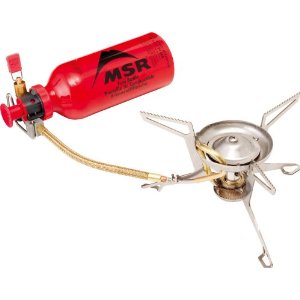
MSR Whisperlite International Stove
Weapons:
- Smith and Wesson Model 317 scandium .22 revolver (ultra light weight, and concealable)
- Walther P-22 .22 semi auto with suppressor (I may want to shoot things quietly) with 3 extra loaded magazines
- spare low-profile concealment holsters for both guns
- 200 rounds assorted .22 ammunition
- Cold Steel Fixed blade knife
- Gerber multi-tool
- Pepper spray grenade and spray canister (for dealing with potential non-lethal threats…riots, dogs and the like)
- Soft body armor
- Small bottle of gun oil and patches
As a side note, I chose .22 pistols because of availability of ammo in a crisis, the fact that I can carry a lot of ammo with little weight, and the fact that they are light and easily concealable. In any case, I’m also likely to be carrying a centerfire pistol (or two) on my person as well.
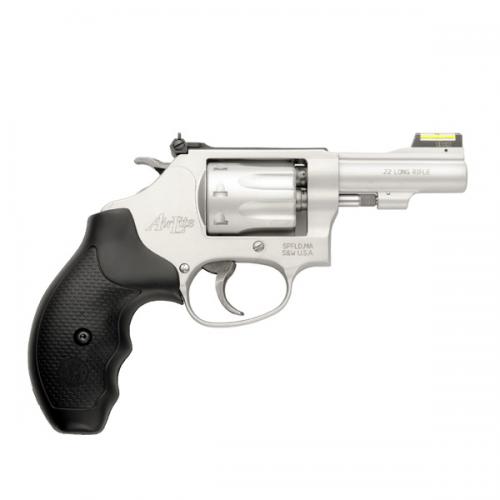
S&W 317
Clothing:
My clothing choices are standard outdoor gear. I want good protection from the elements and camouflage without looking like an enemy soldier. A lot of my clothing is made for hunters, in a hunting camouflage pattern rather than military fatigues. I have dark earth tones for all of my gear and supplement it with camouflage outerwear that makes me look less of a threat and more like a redneck hunter.
- 2 pairs socks
- 2 pairs underwear (polypropylene)
- 1 pair OD green cargo pants (poly and cotton blend)
- Dri-Fit T-shirt
- Dark Grey Polyester pullover shirt
- Green long sleeve polyester shirt
- Black nylon windbreaker jacket with removable “police” placard (camo for dark nights or potentially useful to get into certain secure locations with the police ID)
- Camouflage rain pants and parka
- Sport-style sandals (for river crossings or camp wear)
- Kevlar lined leather gloves (both for warmth and clearing debris)
- Boonie style hat with integrated mosquito head net
Misc equipment:
- small radio and extra batteries (and headphones so I can be quiet)
- paperback book (entertainment, fire starting, toilet paper)
- mini monocular (for checking things out at longer range)
- 2 bandannas (water filters, head covers, bandages, insulation, dust masks, etc)
- insect repellant
- deck of cards
- headlamp (WAY better than a flashlight…it’s hands free!)
- 2 small LED lights (long life and very small)
- 4 cylume light sticks
- hand sanitizer
- ear plugs (for shelters or hostels)
- perimeter alarm (so I can sleep without being surprised)
- Glock Field Spade (combo saw, pick and shovel)
- Whistle (for signaling)
- 2 N-95 dust masks
- sunglasses (tinted and clear)
- length of rubber hose for siphoning water or fuel
- compass
- pen and paper
- Ka-Bar Kukri knife (for heavier chopping)

Surefire Saint Minimus…the best headlamp available
Hygiene supplies:
- Deodorant
- liquid soap/shampoo
- toothbrush and paste
- dental floss
- sunscreen
- razor/shaving cream
- chap stick
- toilet paper
- Epic Wipes (massive, shower substituting wet wipes for adults)
Fire Starting supplies:
- 2 candles
- butane lighter
- windproof lighter
- waterproof matches
- tinder (cotton balls soaked in Vaseline)
- magnesium fire starter
Medical supplies:
My medical kit is strictly bare bones. If I have enough time, I’ll bring one of my pre-packed larger kits with far more supplies and drugs. This kit can be removed from the pack and carried on my belt. Don’t overlook these supplies! In every past natural disaster or terrorist event, formal medical care has been limited or non-existent. You are on your own. If you regularly take any prescription meds, make sure you add a good supply to your bag.
Detachable medical kit containing:
- Caffeine pills (may need some extra stimulants for staying up or for long walks)
- Den-Temp temporary filling material
- oral rehydration salts (dehydration will be a big problem if people can’t drink the local water)
- sterile saline wound and eye wash
- blister kit (moleskin, blisto-ban…you may be walking a lot)
- band aids
- alcohol wipes
- polysporin
- burn gel (lots of burns when people are cooking over open fires)
- hydrocortisone cream (for rashes)
- tweezers
- ibuprofen (10)
- Zantac pills(10) ( for acid indigestion)
- Benedryl pills (10) (for allergies and sedation)
- Decongestant pills(5)
- Immodium pills (anti-diarrheal) (10)
- Vicodin tablets (10)(pain relief, anti diarrheal, anti-tussive)
- Flexeril (Cyclobenzaprine) (4) (muscle relaxer) (you may be working harder than usual and pull some muscles)
- Levaquin (Levofloxacin) (5) (broad spectrum antibiotic)
- Flagyl (Metronidazole)(10) (antibiotic with anaerobic coverage for injuries such as penetrating abdominal trauma and diseases like giardia and dysentery)
- Augmentin (10) (broad spectrum antibiotic that will cover most infections but especially animal bites…there are likely to be lots of stray hungry animals)
- safety pins
- Celox hemostatic gauze
- emergency bandage
- Triangular bandage (for splinting and tourniquets)
- CAT Tourniquet
- compressed gauze
- steri-strips
- roller gauze
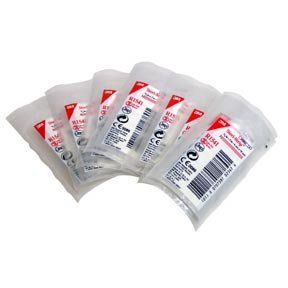
The best alternative to sutures
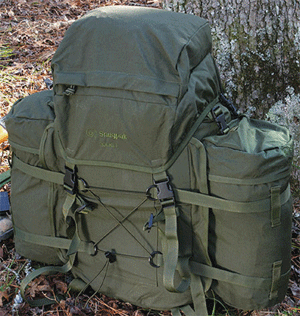
The supplies in each of these subsections are individually wrapped in their own ziplock bags for both water protection and to have additional bags for other uses. All of the small bags are sorted and placed into a Snugpack Rocket backpack. The total weight of everything is 55 pounds. Yes, it’s heavy, but if I need to get rid of some things, I can. I’d rather have too much and have to give things away than have too little.
Like I said,I think this is a good list FOR ME. Take a look at it and use it as a template to figure out what works for you…and don’t forget your kids. They need bags of their own as well. Feel free to let me know if I’ve forgotten anything or ask me any questions if you don’t understand why I’ve included something.
The pack I use to carry it all