Written by: Greg Ellifritz
Most people who are interested in personal preparedness understand and embrace the idea of the “Bug-Out-Bag”, a backpack kept full of survival supplies that you can instantly grab if you have to flee your home during an emergency. The Bug-Out-Bag is a great concept, one I advocate for everyone (see my previous article for details), but it is only part of the solution for true emergency preparedness.
In talking with some smart friends, both in person and online, I realized I had a hole in my survival plans. My Bug-Out-Bag was packed and ready to go, but what happens if the emergency occurred when I wasn’t at home? What if I had to get home (potentially on foot) after a major emergency? Think about all the people fleeing the collapsing buildings after 9/11 or the people stuck away from home in Haiti after the earthquake when all the roads were destroyed. Would you be able to make it home safely under the most trying circumstances with the equipment you have on your person or in your car right now?
Thus was born the idea of the “Get Home” bag. It’s a smaller emergency kit capable of sustaining you for a couple of days if necessary no matter what horrible event may be occurring in the world. The “Get Home Bag” (GHB), should be portable enough to carry on your person or in your car and light enough so that you can travel fast. Think of it as a mini Bug Out Bag.
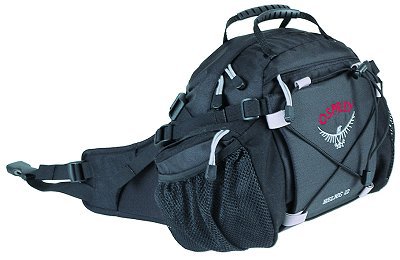
For my bag, I chose something that didn’t appear threatening or militaristic as I don’t want to draw attention to myself in an emergency. I want to be as low profile as possible, not wanting to look like a threat, an occupying force, or someone who has a lot of stuff to steal. Because of that, I chose the Osprey Helios Lumbar pack, something you might more likely see on a hiker than a soldier. The Helios has ample room and can be carried like a briefcase, slung over the shoulder, or strapped around the waist if you want your hands free. Mine is in a neutral gray and blue color that wouldn’t attract much attention on anyone wearing it in public. It’s roomy and holds just the right amount of stuff to get me home.
Here are the contents of my bag and why I think they are important. Remember, I am trying to be a generalist here…preparing for any possible emergency with a minimal amount of gear. Undoubtedly, there are better single items for a more purposeful use, but I want a small amount of gear that will get me by no matter what is going on. I want to be ready for a terrorist attack, EMP event, natural disaster, or even if my car breaks down far from home. Here’s what I carry:
2- 20oz bottles of water in outside pockets
Gerber Multi-Tool in sheath attached to shoulder strap
10 safety pins attached to zipper (multiple uses, for fastening, fishhooks, shelter fabrication, or splinter removal…safety pins are light and take up no space. Include a lot of them in your kit)
Weapons:
Ruger Speed-Six .357 magnum revolver with six speedloaders and an IWB holster
Strider Fixed blade Knife
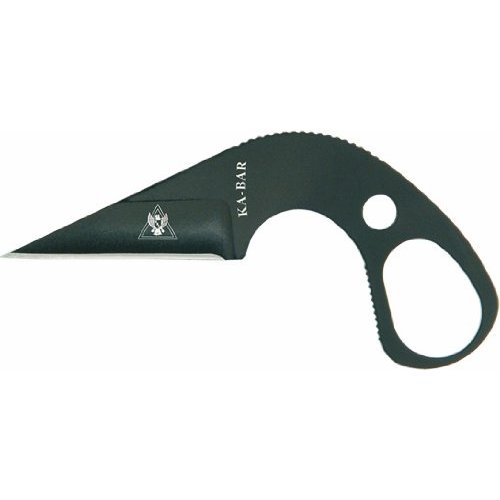
Ka-Bar LDK knife (for more “covert” protection)
Tear gas grenade (if I get caught up in a riot and need to disperse a crowd)
Why the revolver? Since I am always armed with at least one pistol on my person, this gun will likely serve as a backup. I want something sturdy, powerful and indestructible. The Ruger fits the bill. There isn’t much that will break, .38/.357 ammo is available anywhere, and anyone can shoot it. As it is my backup, I may be loaning it to an unarmed companion. Almost anyone can safely carry and shoot a revolver. Also, since this kit rides in my car trunk full time, theft is a concern. I picked this gun up used for $150. If it gets stolen, I won’t be happy, but at least I’m not out too much money.
Food, cooking and water purification:
Food is overemphasized in many survival texts. I didn’t include much here because I can live without it for a long while. Water is crucial. You must have a way to purify water or cook acquired food in a more long-term emergency.
3 Powerbar “Performance” bars- won’t melt in the heat
1 “Frontier” water filter straw…light cheap and effective water filtration
1 bottle of water purification tablets
“Sierra” steel cup/bowl for boiling water, cooking, or drinking
Esbit folding pocket stove with 3 fuel tabs
Large piece of aluminum foil that can be used for cooking, making a bowl, or signaling
Fire Making Materials:
Windproof lighter
Waterproof/Windproof matches
Magnesium firestarter
2 packages “EZ-Fire” tinder material
Shelter Making Materials:
Mini folding pocket saw
50′ of Paracord
rain poncho
trash bag
silver “space” blanket
“Heatsheets” 2-person survival blanket (space blanket on steroids)
2 yard “flat pack” of duct tape
Light and signaling:
LED Headlamp (if you don’t have a dozen headlamps you are missing out. These things are essential! It’s the only way to survive long term power outages! You strap it on your head and you don’t have to hold a flashlight. Walk, read, cook, whatever…it’s the only way to go!)
Blue LED light
Streamlight Scorpion tactical flashlight
Extra batteries for each
Loud signal whistle
Mirror
Medical Supplies:
Blister kit (Blisto-Ban)…I may be walking a lot
10 band aids
2 Triangular bandages (for wound packing, bandage creation, burn wrapping, tourniquets or slings)
Military trauma dressing
4 Imodium tablets (for diarrhea)
2 Levofloxacin broad spectrum antibiotic pills
4 Ibuprofen tablets
4 Vicodin tablets (for more serious pain)
3 Benedryl antihistamine tablets (for allergic reactions, sneezing, or sedation)
6 caffeine pills (for energy to walk, stay up late, or to combat coffee withdrawal)
2 wound cleaning wipes
2 hand sanitizing wipes
finger scalpel
1 package antibiotic cream
miniature tweezers
small bottle of eye drops
Miscellaneous Gear:
Mini am/fm radio (with headphones) for emergency news updates
Compass
Camouflage bandanna (for head cover, water filter, dust mask, etc)
Pen and note pad
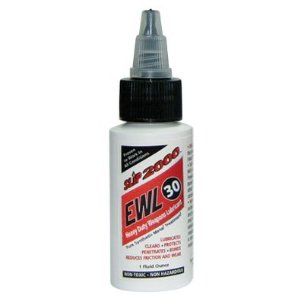
small sample size package of gun oil (for firearm lubrication or fire starting)
10 pack of antibacterial baby wipes (for body cleaning, toilet paper, etc)
1 pair spare socks
Small compass
Each of these subcategories are packed in their own ziplock bags (which have additional uses). The entire kit (including the water, gun and spare ammo) weighs 13 pounds.
What do you think? Do you have a GHB? Did I forget anything? Feel free to comment below or send me an email if you have any questions.


Pretty good sounding list Greg. I’d add either Duct Tape or Zip Ties, they’re pretty good for adhoc shelters where ya don’t wanna lash a bunch of stuff together. Also, instead of the Stryder I’d say put a machete in there, but that may be an area specific choice considering the region of the US that I live in.
This article got me thinking, kits seem to be pretty task specific for a lot of folks and these acronyms thunder around the preparedness community all the time. Off the top of my head I can list: INCH (I’m Never Coming Home Again), GOTH (Go To Hell), Party Bags (usually specifically loaded for fights), Bugout Bag, GHB (Get Home Bag). I took a bit of a different approach and borrowed the concept of the “Possibles” bag from the Mountain Men of the Fur Trade/Longhunter era. Seems to work alright for me.
Duct tape is already on the list…under “flat pack duct tape”. I agree it is very useful! I like the machete idea too, but seeing how I live in an urban area, its use to me would be somewhat limited. Besides that, I think it would draw too much negative attention in my urban environment. I want to blend in as much as possible.
Everyone must decide on their list based on their particular situation. If I traveled through more rural environs, I would consider a machete a required piece of kit.
Doh! Now I have to lose 5 Tacticool points for missing that.
Yeah, here in Florida considering the nature of the local flora it just makes sense to pack a machete and I have my EDC for finer tasks.
This article was a great help in putting together my own GHB. I would love to hear why you chose the folding stove over a small (3oz) canister stove. is it simply because of weight?
That’s exactly it…size and weight
Great article! I am putting together my GHB and it is very similar to yours. I’m using a backpack like a student would carry here in Phoenix at ASU. It’s gray and black and has a built in camelbak type water storage. I carry purified water in my trunk to fill the camelbak before buggin’ home. I will also have two bottles stored on the side for my girlfriend. Speaking of which I intend to stock with her “special” supplies along with any medication she may need. I make para-cord bracelets which use a buckle which has a built-in whistle and compass. I also make one which attaches to a pack. She’s a med student so my IFAK is more advanced and includes stuff for beyond band aid situations. Getting her involved in this project by asking her input on the medical stuff and changed things dramatically. She’s gone from almost rolling her eyes to taking more of an active role. And thus begins her indoctrination to urban prepping.
BTW…love your articles…God Bless You,
Dante in PHX
Thanks Dante! I’m glad you find my ramblings useful!
Nice set up and article. I am putting together my own get home bag. Here are some things I’m including in mine that I thought you might want to consider for your own.
Latex or nitrile gloves for dealing with biological situations. They can be used as water containers, toilet paper duty (lol doodie) and as firestarter.
Leather palm gloves for moving dangerous debris i.e. after building collapse or as pot holder.
Reusable zip ties. Superglue can be used for firestarting too. Wire. Sewing needle. Thread. Wire saw (you may need to cut that debris)
Swap out your radio’s headphones for cellphone earbud headset. Saves electricity when using cellphone and when listening to radio. Also saves weight over headphones.
Emergency blanket + plastic oven bag + aluminum foil pot = Solar Cooker (google it)
Metal water bottle (if you don’t already have one). Can be used to boil water or as self defense tool or as signal device.
Excellent ideas!
I haven’t built my GHB yet but after reading this article and the followup comments, I did think of something a woman (possibly a man depending upon their job) may want to include in a GHB. Since women often don’t wear shoes conducive to walking a great distance, I think a pair of tennis shoes or hiking boots should be included. Yes they will add weight but I know I would rather they be there than try to walk far in sandals or heels.
Considering I work 30 miles from home, I keep an old pair of tennis shoes and a pair of socks in my trunk at all times for just that reason. My BOG stays in the trunk as well, and I keep enough in it to use it for a GHB. It doesn’t even weigh 13 pounds, due to careful re-packing over the years. Men – put an OB tampon or two in there, too, as they are useful for stab wounds, etc.
Or for when your girlfriend/wife forgets hers!
Greg,
How do you feel about putting cash in the bag or bartable items? Maybe power outage keeps you from accessing debit card and you need to spend $$ on trek home. Often I am 65 miles from my house and may need to cash to make things happen.
Shawn
Shawn, I think it is a very good idea. I didn’t list it because I always carry a couple hundred dollars in cash with me…just in case.
was map on there ? a state or regional map if you are that far away and a city map if you are in town. Sometimes we forget that we drive the long way because its shorter time-wise but strait line on foot is best, it can also help avoid hostile areas. Just don’t go to far with strait line , don’t cut through yards, cut through parks and stay off trails if possible. If you must stop for rest climb into the thickest sticker thicket you can find, listen for an hour before you come out.
Great list. I would add lock picks and a plastic felling wedge (to reinforce a locked door from the inside), especially in an urban environment.
Good ideas Andrew. The plastic door wedge is a cheap insurance policy.
can you recommend a good collapsible baton?
also, can’t recommend highly enough that folks have a dedicated pair of old hikers in your car.
I like the ASP best. Monadnock makes a good one as well. The 21″ size seems to work best for most people.
I mentioned it in a comment to a recent previous post, but feel it needs saying again: Vicodin is a common drug of abuse and while I totally understand WHY you are carrying it, and I am 100% presuming that you would only use it for a medically indicated purpose, it is a controlled drug. As a police officer, you might be given more latitude by other officers regarding possessing and driving around with that in your car all the time, but would the average civilian be given that latitude?
You got a regular bag so you won’t look like a threat? Just your mere hulking presence looks like a threat! As long as you aren’t in booty shorts. Good article though!
I have to do what I can! I might be able to pull off the short hair and muscles but if I’m wearing camo fatigues and carrying a load bearing vest people are going to have their doubts!
I think a nice pair of booty shorts would tone the look down. No scary people wear those. Ever seen a mass murderer, terrorist or elite military in booty shorts? I’m sure David has a pair he can lend you to keep in your bag should the need arise.
BTW, are tear gas grenades or something similar legal for civilians to have?
Yes, they are…they are just somewhat hard to find.
I am constantly reviewing my get home bag and refining it. Thanks for some great ideas like the baby wipes. And the meds…we have meds at home but I didn’t have any in get home bag. I am also going to look up “heat sheets”. I have the foil blankets but not familiar with a heat sheet.
Donna,
Glad you found my list useful! A friend turned me on to the Heat Sheets. They are a lot more durable and warm than the space blankets. I think you’ll like them!
Just a question. Vicoden as mentioned previously is a controlled med. Forgive my ignorance but how do you get it for ‘just in case’ situations?
If you have a good relationship with an understanding physician, he might prescribe you a small amount for that purpose. I do a lot of travel in third world countries way outside civilization and may need to take care of myself. The doc understands that and takes care of some emergency meds for me.
You responded to almost everyone. Damn its nice to have someone in the training community as passionate as you!! Thanks for the info. All good tips and tricks of the trade.
Thanks Brandon!